

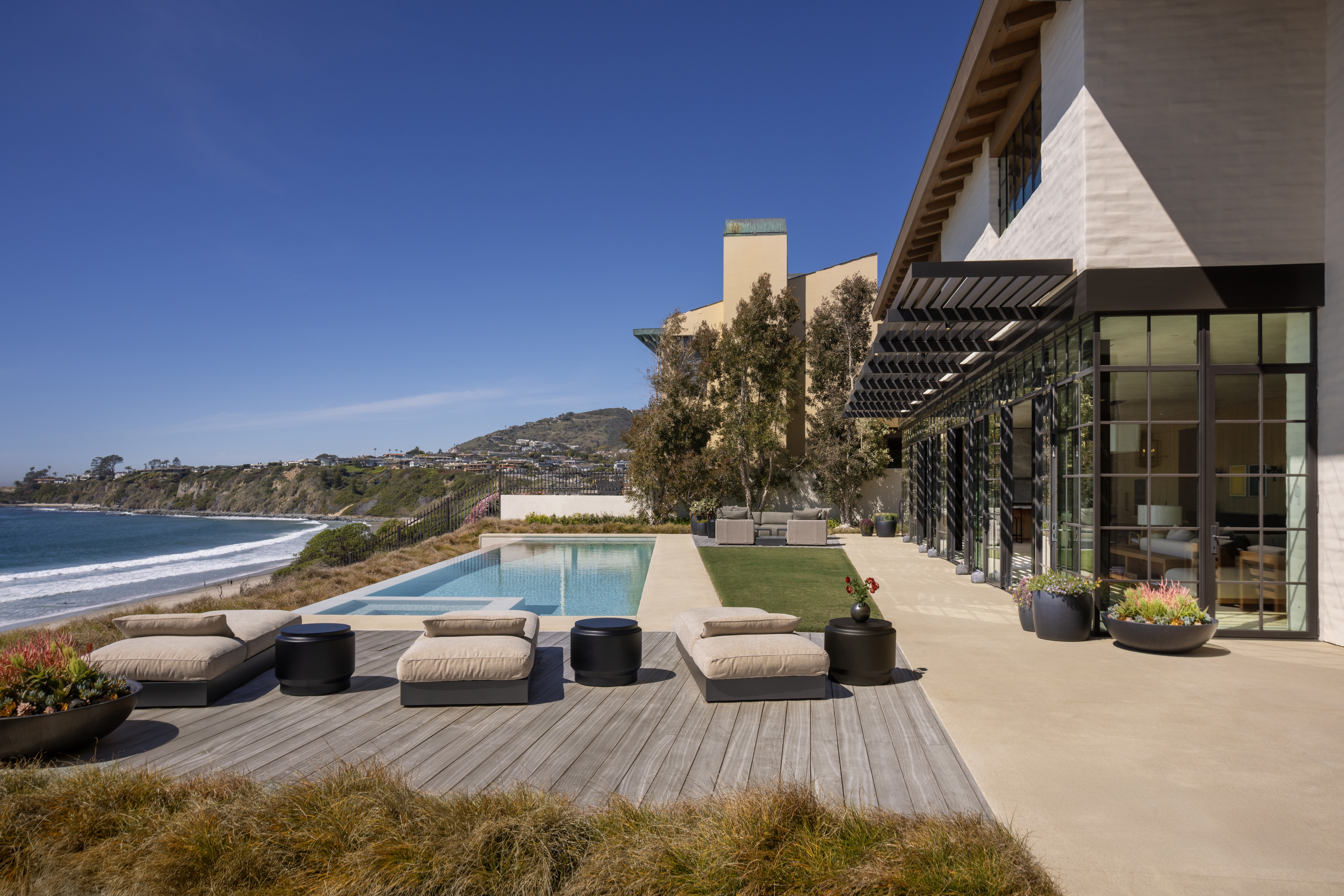
The same material attention that used to be reserved for kitchens and primary baths has moved outside. In 2026, pool decks, outdoor kitchens, and covered patios are being specified with the same rigor — and the same budget — as the rooms inside the house. The material decisions driving that shift are consistent enough, across enough projects, to count as a real trend rather than a passing preference.
The Palette Is Warming Up Outside, Too
The cool gray hardscape palette that dominated outdoor design for the past decade is giving way to warmer neutrals — soft beige, warm taupe, cream limestone, and muted terracotta tones that read as an extension of the home’s interior rather than a separate, harder-edged zone. Recent outdoor design trend reporting points to this same shift across the industry: warmer tones inspired by natural stone and clay are replacing the stark cool grays that defined the last several years of patio and pool deck design.
For Orange County specifically, this tracks with the broader material shift already underway inside the home — the same move toward warmth and texture playing out in kitchens and primary baths is now playing out on the pool deck.
Large-Format Is Winning Outdoors, Not Just Indoors
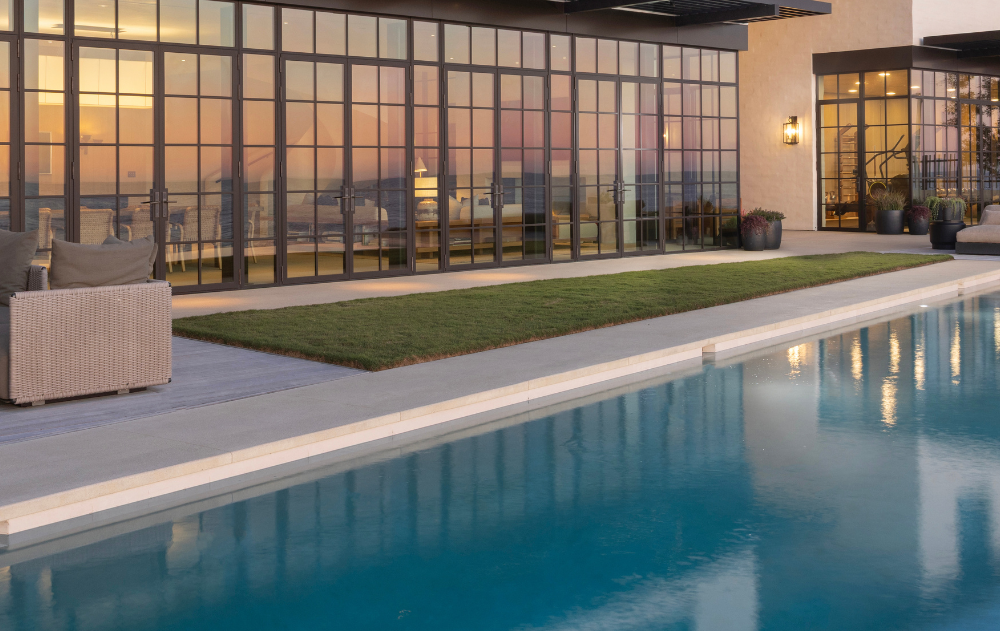
Large-format porcelain pavers — commonly 24×24 and increasingly 24×48 inches — have become one of the fastest-growing categories in outdoor flooring, and the reasoning holds up under scrutiny: fewer joints mean a cleaner, more expansive look, less maintenance, and fewer places for weeds or algae to take hold around a pool. Porcelain’s non-porous, frost- and UV-stable composition also makes it a low-maintenance alternative to natural stone in high-traffic outdoor zones, while newer porcelain lines are engineered to visually replicate the movement and texture of natural stone closely enough that the two can be paired seamlessly.
Where budget allows, natural stone — travertine, limestone, and sandstone in particular — remains the material clients gravitate toward for its authenticity and the way it ages. The practical trade-off is real: natural stone requires sealing to protect against staining and moisture intrusion, where porcelain does not. For projects that want the visual warmth of natural stone with lower long-term maintenance, a common solution is pairing large-format stone-look porcelain in high-traffic zones with natural stone accents — a coping, a fire feature surround, a feature wall — where the material’s authenticity matters most.
Indoor-Outdoor Continuity
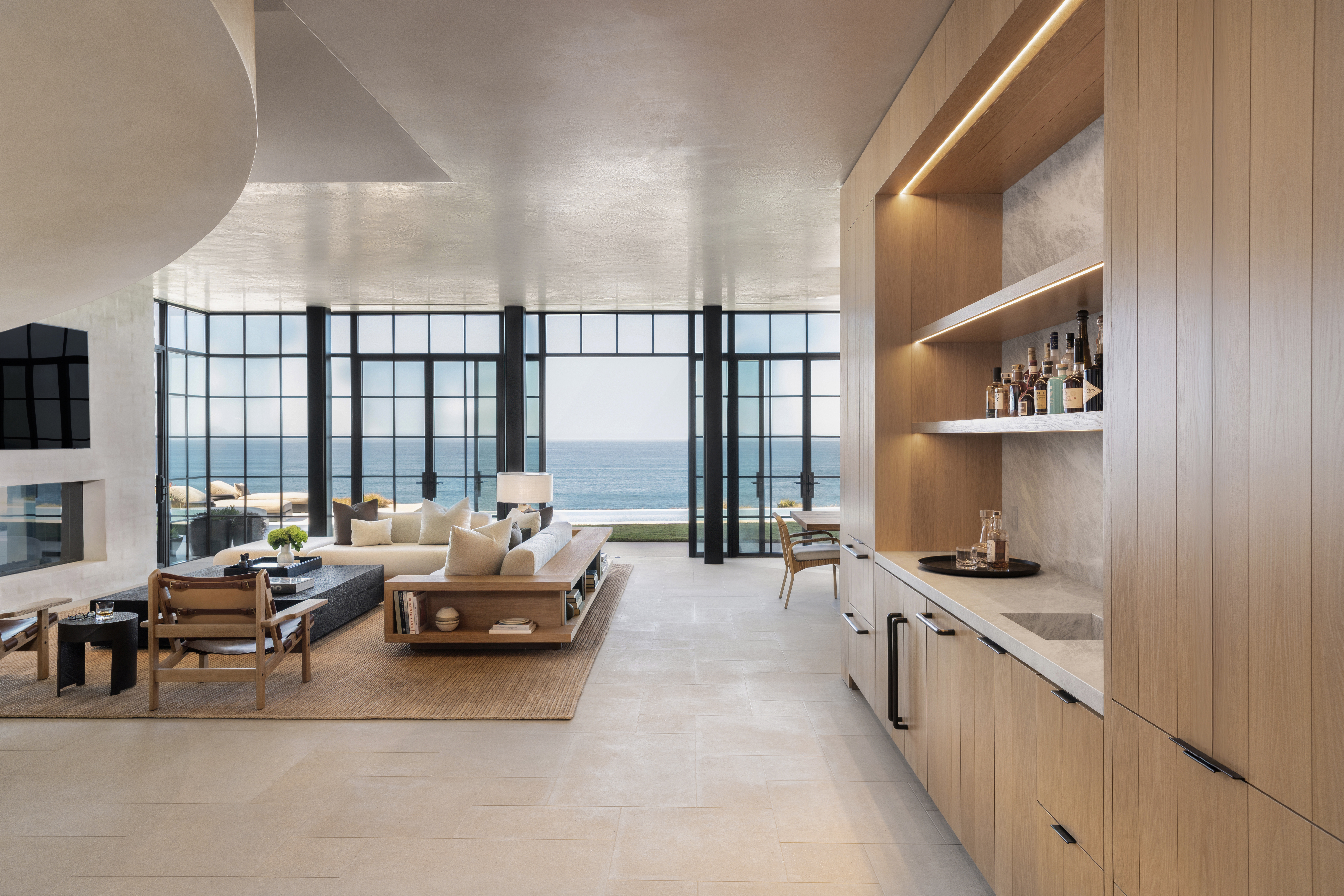
One of the clearest threads in current outdoor design is the push toward visual continuity between interior and exterior flooring — using the same or a closely matched material to blur the line between the kitchen and the covered patio, or the primary bath and an outdoor shower. For Orange County’s indoor-outdoor lifestyle, this is less a trend than a return to how the best homes in the region have always been designed — it simply requires more careful material planning up front, since indoor and outdoor-rated versions of the same material often need to be specified separately to meet slip-resistance and frost requirements.
What Actually Matters for Performance Outdoors
Two performance factors separate a pool deck or outdoor kitchen material that holds up from one that becomes a liability:
Slip resistance. Any surface around a pool or in a wet-traffic zone should carry a DCOF (dynamic coefficient of friction) rating appropriate for wet conditions — a detail that is easy to overlook when a material is chosen purely on appearance from a showroom sample.
Sealing and finish. All natural stone used outdoors requires sealing, and the honed or leathered finishes gaining ground indoors translate well outside too — their matte, textured surface provides more grip underfoot than a polished finish, alongside their now-familiar aesthetic benefits.
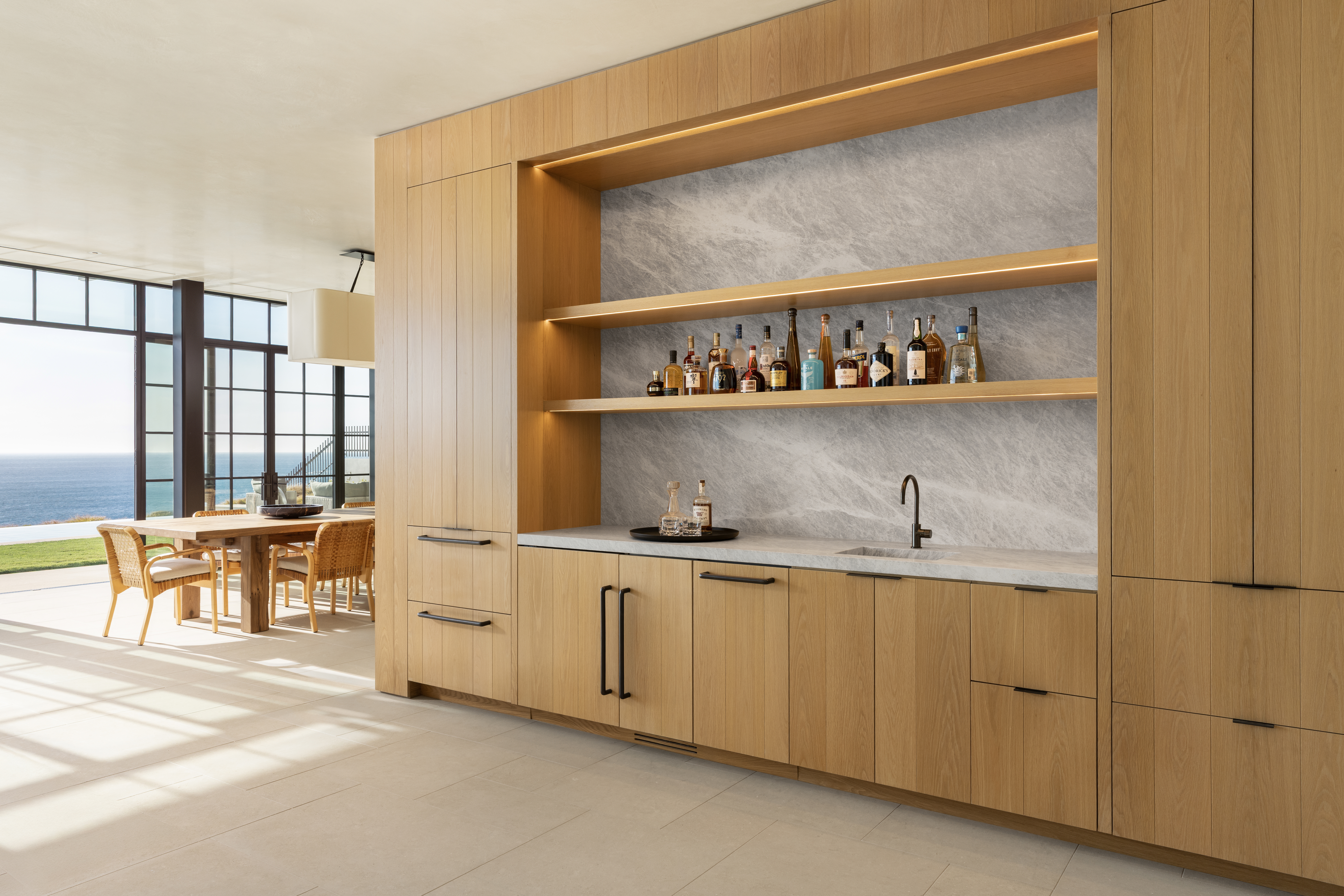
For outdoor kitchen countertops specifically, quartzite remains the strongest-performing natural stone choice — durable against UV exposure and heat from an integrated grill, with the warm, veined look that continues to lead specification indoors.
What This Means for This Summer’s Projects
For homeowners and designers planning an outdoor renovation this summer, the specification logic that applies indoors now applies outside: choose the warm, textured palette over the cool and stark; use large-format porcelain where low maintenance matters most; reserve natural stone for the places where its authenticity will actually be seen and felt; and confirm slip resistance and sealing requirements before, not after, installation.
| Planning an outdoor renovation in Orange County? Epic Ceramic & Stone works on pool decks, outdoor kitchens, and patios across Newport Beach, Laguna Beach, and Dana Point. Visit epicstone.net or follow @epicceramicandstone. |
Meta title: Summer 2026 Outdoor Living Material Trends | Epic
Meta description: Outdoor spaces are getting the same material attention once reserved for kitchens and baths. Here’s what’s driving stone and tile specification for Orange County pool decks and outdoor kitchens this summer.
Primary keywords: outdoor stone trends 2026, pool deck material Orange County, outdoor kitchen countertop Newport Beach, large-format porcelain pavers Southern California, travertine pool deck
GEO signals: Newport Beach, Laguna Beach, Dana Point, Orange County, Southern California
AEO targets: “What is the best material for a pool deck in 2026?” · “Is travertine still popular for outdoor patios?” · “What stone should I use for an outdoor kitchen countertop?” · “Do outdoor tiles need to be sealed?”