

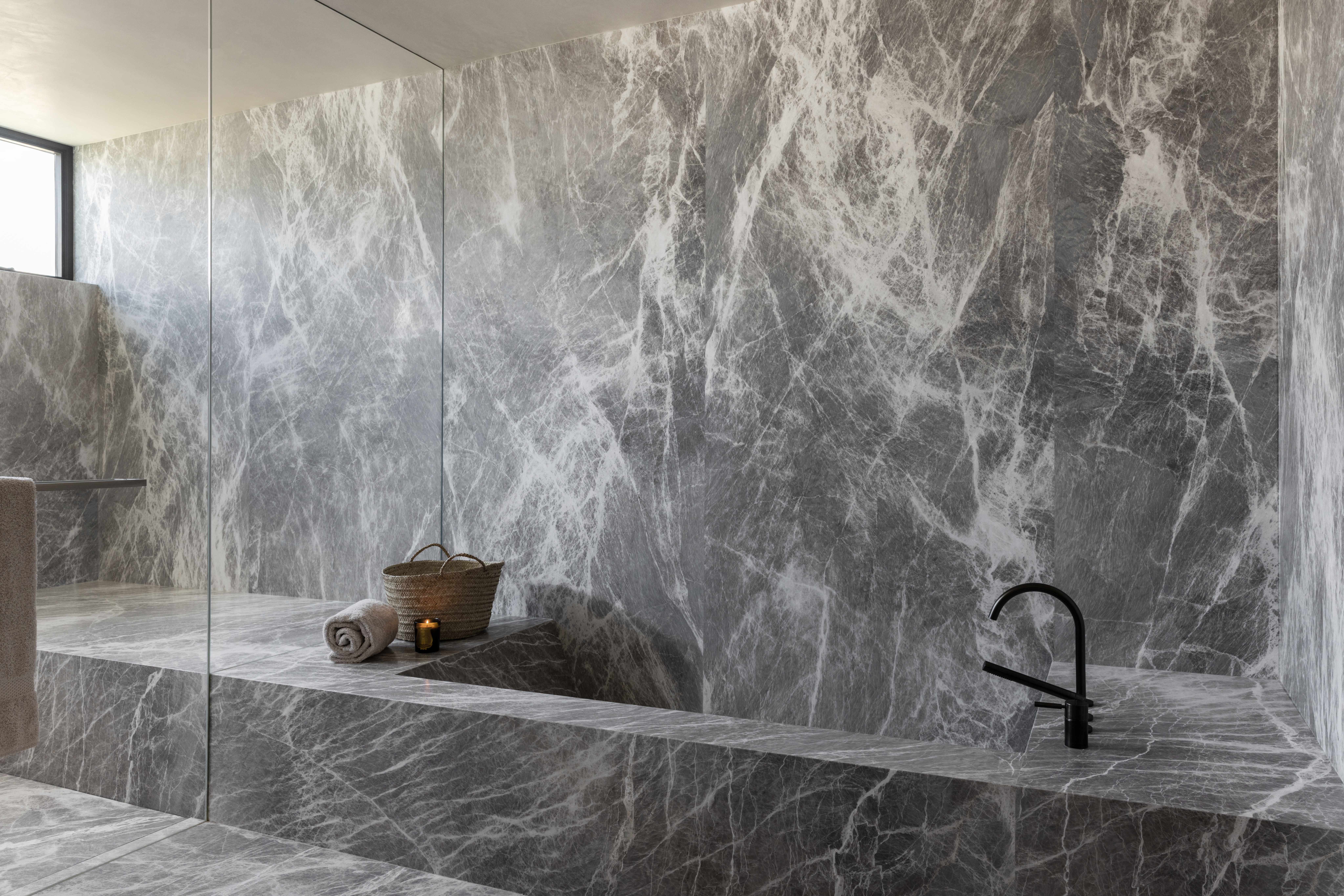
It is the question Josiah Lilly hears at almost every consultation, from homeowners planning a kitchen remodel in Corona del Mar to interior designers specifying a primary bath in Newport Beach.
Natural stone or porcelain?
After 35 years of installing both — across thousands of projects in Orange County’s most demanding homes — Josiah’s answer is never simple. Because the right choice depends entirely on the project, the client, and how they actually live.
“I don’t have a horse in the race. I install both. I love both. But they are genuinely different, and the wrong choice for the wrong application can be a very expensive lesson,” he says.
Here is what Josiah tells every client who sits down with him at Epic Ceramic & Stone.
First: What Are We Actually Comparing?
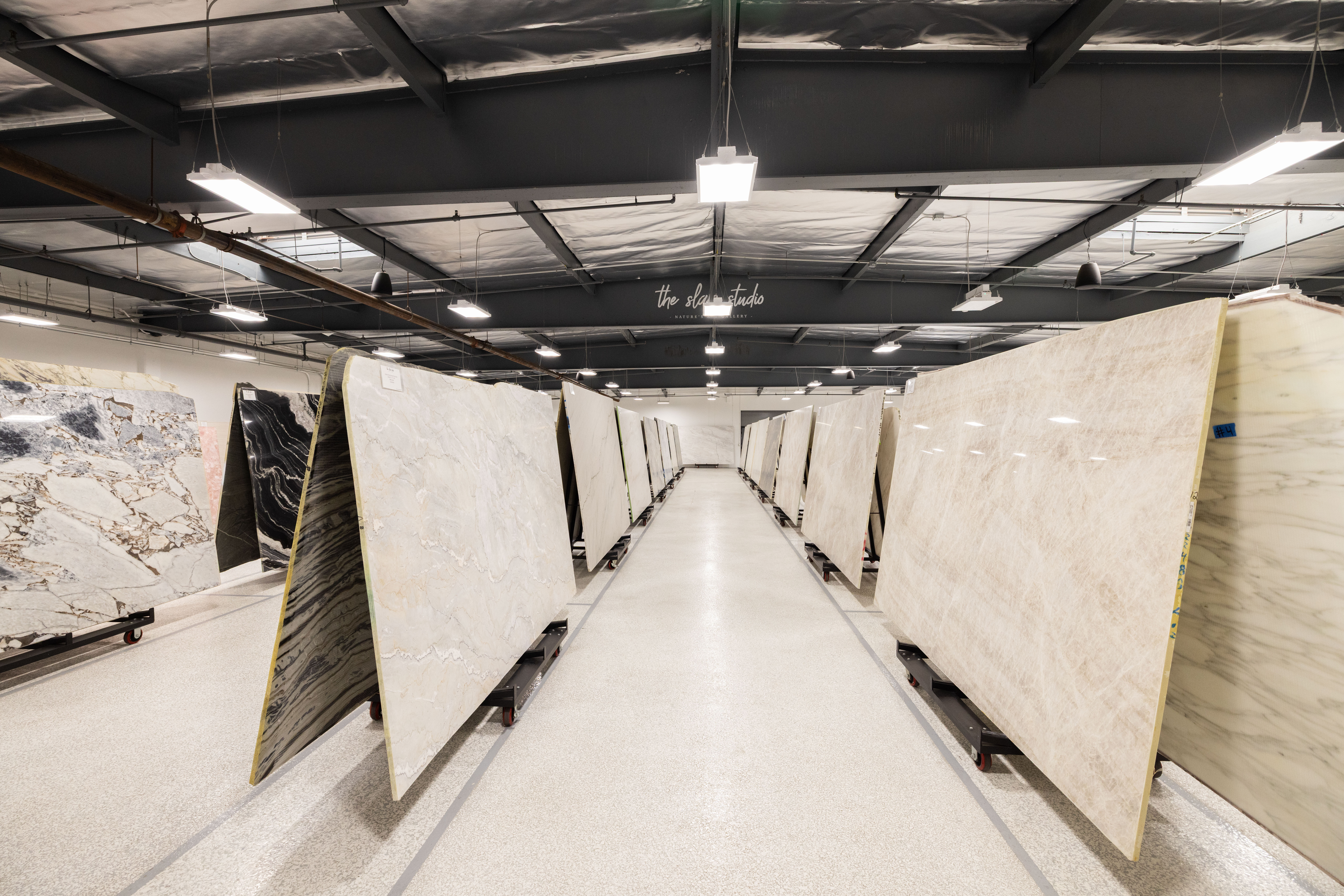
Natural stone refers to materials quarried directly from the earth — marble, quartzite, limestone, travertine, slate, onyx, and granite. Every slab is unique. No two pieces are the same. The veining, coloration, and movement you select during the material review process is exactly what you get in your home.
Porcelain, by contrast, is a man-made material — clay fired at extremely high temperatures into a dense, non-porous tile. Modern large-format porcelain can convincingly mimic the look of marble, travertine, concrete, or wood — and in some formats, it is printed from actual stone photography.
Both are beautiful. Both are durable when properly specified and installed. But they behave very differently — and that behavior is what determines which material belongs where.
Durability: The Real-World Comparison
Porcelain is one of the hardest surface materials available. It rates 7 to 8 on the Mohs hardness scale — harder than most natural stone — and its non-porous surface is virtually impervious to staining, moisture, and acids. For high-traffic floors, outdoor applications, and any surface that will see serious daily use, porcelain is extraordinarily forgiving.
Natural stone is softer and more variable. Marble, one of the most sought-after materials in luxury residential design, is also one of the most reactive — it can be etched by acidic liquids like lemon juice, wine, and coffee. Quartzite is significantly harder and more resistant than marble. All natural stone requires sealing and ongoing maintenance — limestone and travertine among the most demanding, given their porosity.
“The homeowner who tells me they want Calacatta marble on their kitchen island and they also have three kids under ten — I have a very direct conversation with them. Marble is not forgiving. If they’re okay with that, if they love the idea that it will develop a patina and tell the story of their family’s life in it, then it’s the perfect choice. If they’re going to panic every time someone sets a glass of orange juice down, porcelain is a better answer.”
Maintenance: What You’re Signing Up For
Natural stone requires sealing — typically once a year for softer stones like marble and limestone, less frequently for harder quartzite. Sealing is not complicated, but it is a commitment. Natural stone should also be cleaned with pH-neutral products rather than standard household cleaners, which can strip sealers and dull surfaces over time.
Porcelain requires almost no maintenance beyond regular cleaning. It does not need to be sealed. It does not react to acids. It can be cleaned with virtually any product. For clients who want beauty without upkeep, porcelain offers enormous practical advantages.
One important distinction: format matters. For countertops, large-format porcelain slabs are fabricated and seamed the same way natural stone is — there are no grout joints to maintain. Grout becomes a factor only in tile applications, such as porcelain floors or exterior installations, where epoxy grout is now standard practice on Epic’s commercial-grade projects for its stain resistance and durability.
Aesthetics: The Case for Natural Stone
This is where the conversation shifts decisively. Modern porcelain is visually sophisticated — and some large-format slabs, particularly those printed from actual stone photography, are genuinely beautiful. But they are reproductions. And when you put them next to the real thing, the difference is discernible.
Natural stone has depth. It has translucency. Light moves through a piece of white marble in a way that no porcelain tile can replicate. The veining of a book-matched quartzite has a logic and flow that a printed surface cannot capture. These materials have been forming for millions of years — and that origin shows.
“We have a 12K-resolution slab scanner that can create a fully interactive 3D rendering of exactly how your actual slabs will look in your kitchen or shower — before we cut a single piece. When clients see that, when they see their actual stone in their actual space, porcelain becomes a much harder sell. There is nothing like the real thing.”
For premium residential applications — a statement kitchen island, a primary bath, a fireplace surround, a grand entry floor — natural stone sets a level of luxury that porcelain simply cannot match.
Cost: The Honest Picture
Natural stone is generally more expensive than porcelain for material costs. The material itself must be quarried, cut, and shipped from its country of origin. Installation requires specialized expertise: structural support, precision cutting around veining to maintain continuity, and book-matching when multiple slabs are used — plus waterproofing for wet applications such as shower surrounds. For countertops, fireplace surrounds, and other dry installations, waterproofing is not a factor.
Large-format porcelain has its own installation complexity. These tiles — which can run 60 inches by 120 inches or larger — require a perfectly flat substrate, specialized adhesives, and careful handling to avoid breakage. In some cases, the specialized equipment and handling required for large-format porcelain fabrication can make it comparable in cost to natural stone installation — or even more expensive.
The honest cost comparison is this: natural stone will typically run 20 to 50 percent higher for material costs, but the installation cost gap is narrower than most clients expect — and can close entirely depending on the format and complexity of the porcelain specified. And the long-term value of a home with exceptional natural stone — particularly in markets like Newport Beach and Laguna Beach — is demonstrably higher.
Application by Application: Josiah’s Recommendations
After 35 years of installing both materials across every application imaginable, here is how Josiah recommends thinking about the choice:
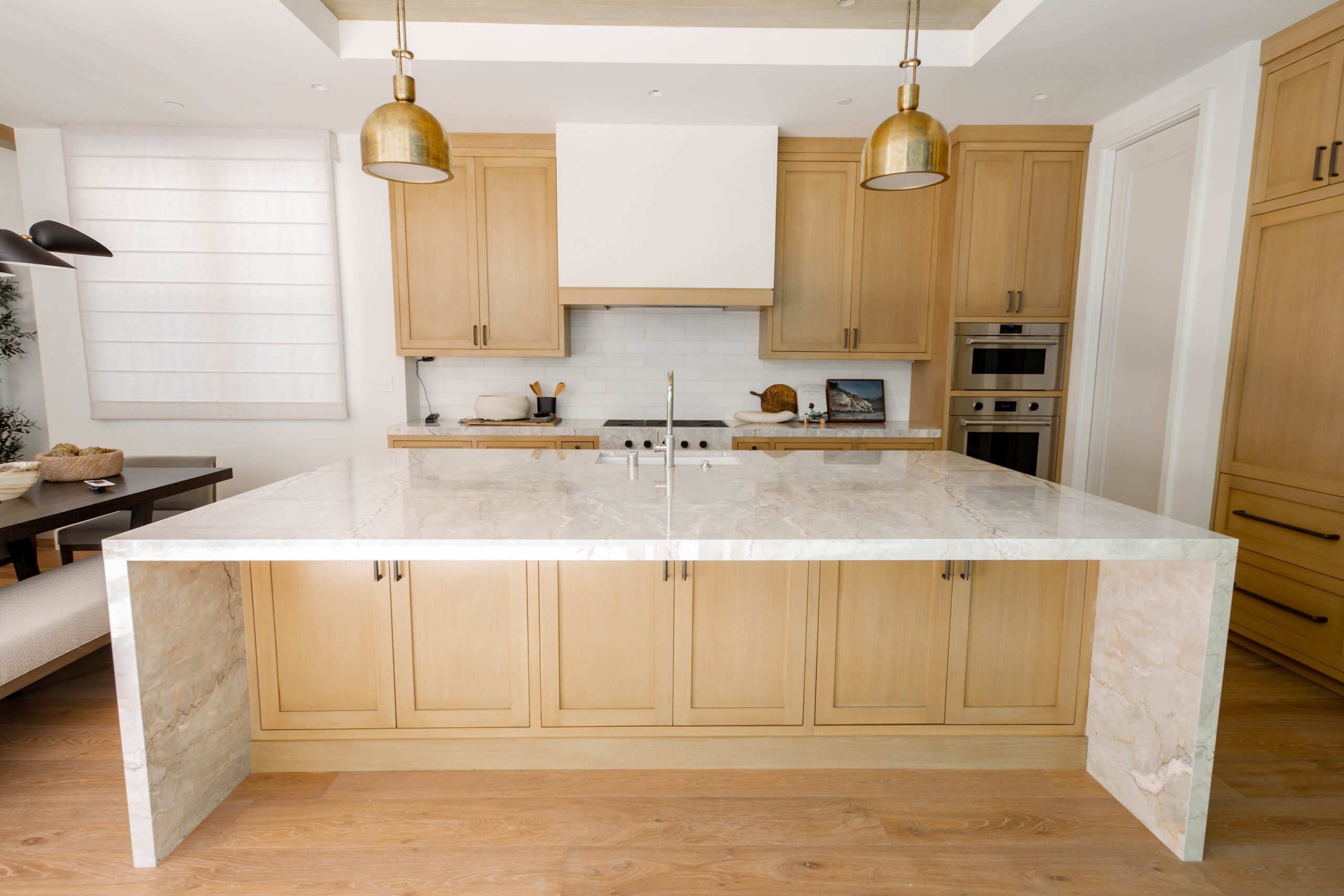
Kitchen countertops: Quartzite is Josiah’s first recommendation for clients who want natural stone with minimal maintenance. It has the visual drama of marble with significantly better durability. For clients who will use their kitchen heavily, large-format porcelain slabs are an excellent alternative — particularly for islands that see daily chopping and cooking.
Primary bathroom: Marble remains the gold standard for luxury primary baths. The material is at home in a lower-traffic environment, and its beauty — particularly in a book-matched shower surround — is unmatched. Porcelain is an excellent choice for family bathrooms and guest baths where durability is a higher priority.
Outdoor living: Large-format porcelain is Josiah’s recommendation for pool decks, outdoor kitchens, and patio flooring. Its non-porous surface handles freeze-thaw cycles, pool chemicals, and Southern California sun without complaint. Natural stone — particularly travertine and limestone — works beautifully in outdoor settings but requires more diligent sealing and maintenance.
Entry floors: Natural stone — marble, limestone, or large-format travertine — makes an exceptional statement in a grand entry. The material is visible from the moment the front door opens. This is one of the highest-impact applications in any custom home, and the investment in natural stone here delivers outsized visual return.
Fireplace surrounds: Natural stone is almost always the right answer. The warmth, texture, and depth of marble, limestone, or quartzite around a fireplace creates an environment no tile can replicate. This is one of the most emotionally resonant surfaces in a home — and it deserves the real thing.
The Installation Question: Why Material is Only Half the Answer
Josiah makes one point emphatically when homeowners ask about natural stone versus porcelain: the material matters, but the installation matters just as much.
Improper waterproofing behind a marble shower can cause mold and structural damage within years. A large-format porcelain tile installed over an inadequately prepared substrate will crack — and replacing it means tearing out the entire floor. The cheapest bid on stone installation is almost always the most expensive decision in the long run.
“We say this to every client: your home is only as good as the people who build it. You can spend $50,000 on the most beautiful marble in the world and have it ruined by someone who doesn’t know what they’re doing. The material is one half of the equation. The craftspeople behind it are the other half.”
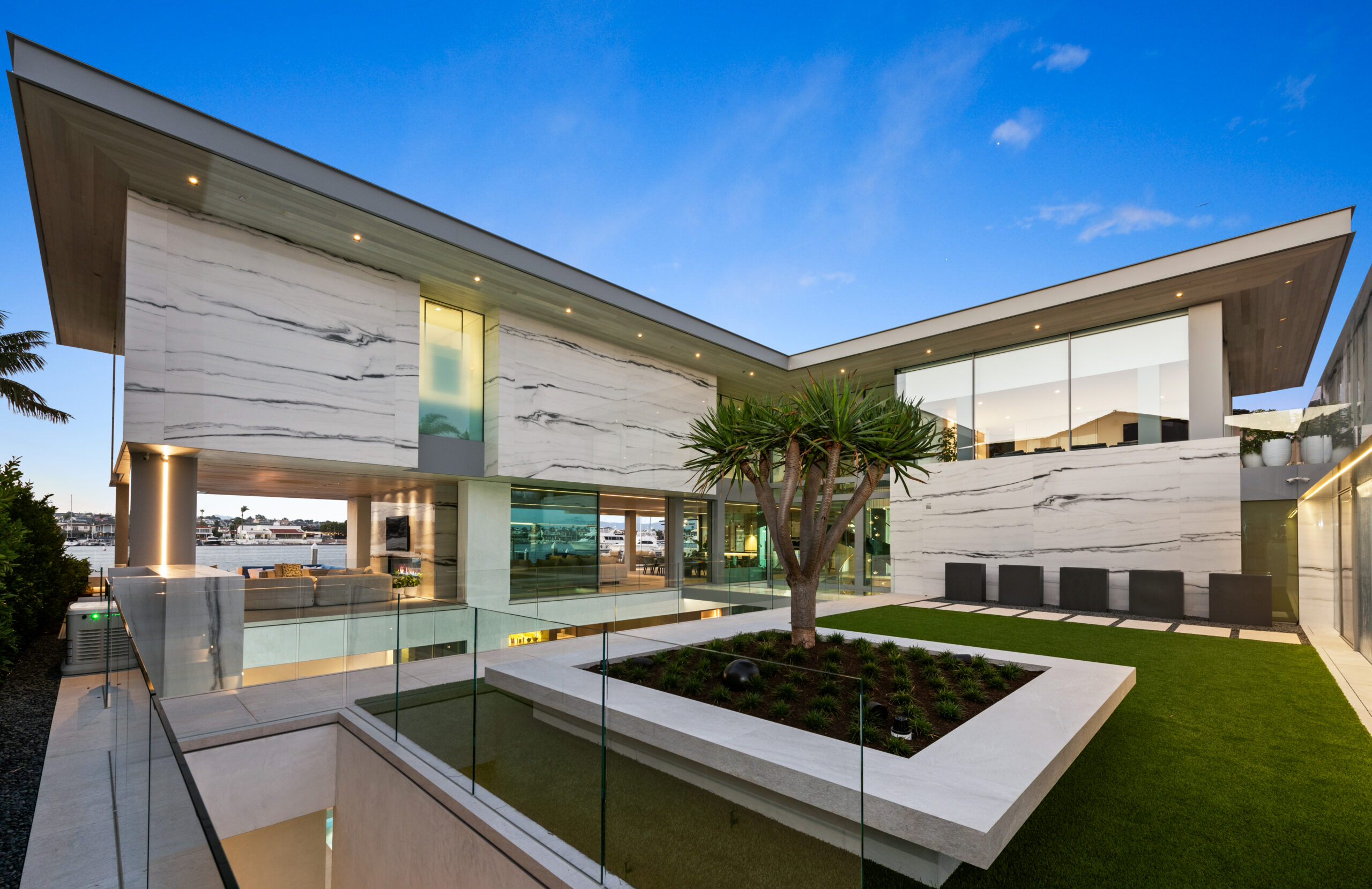
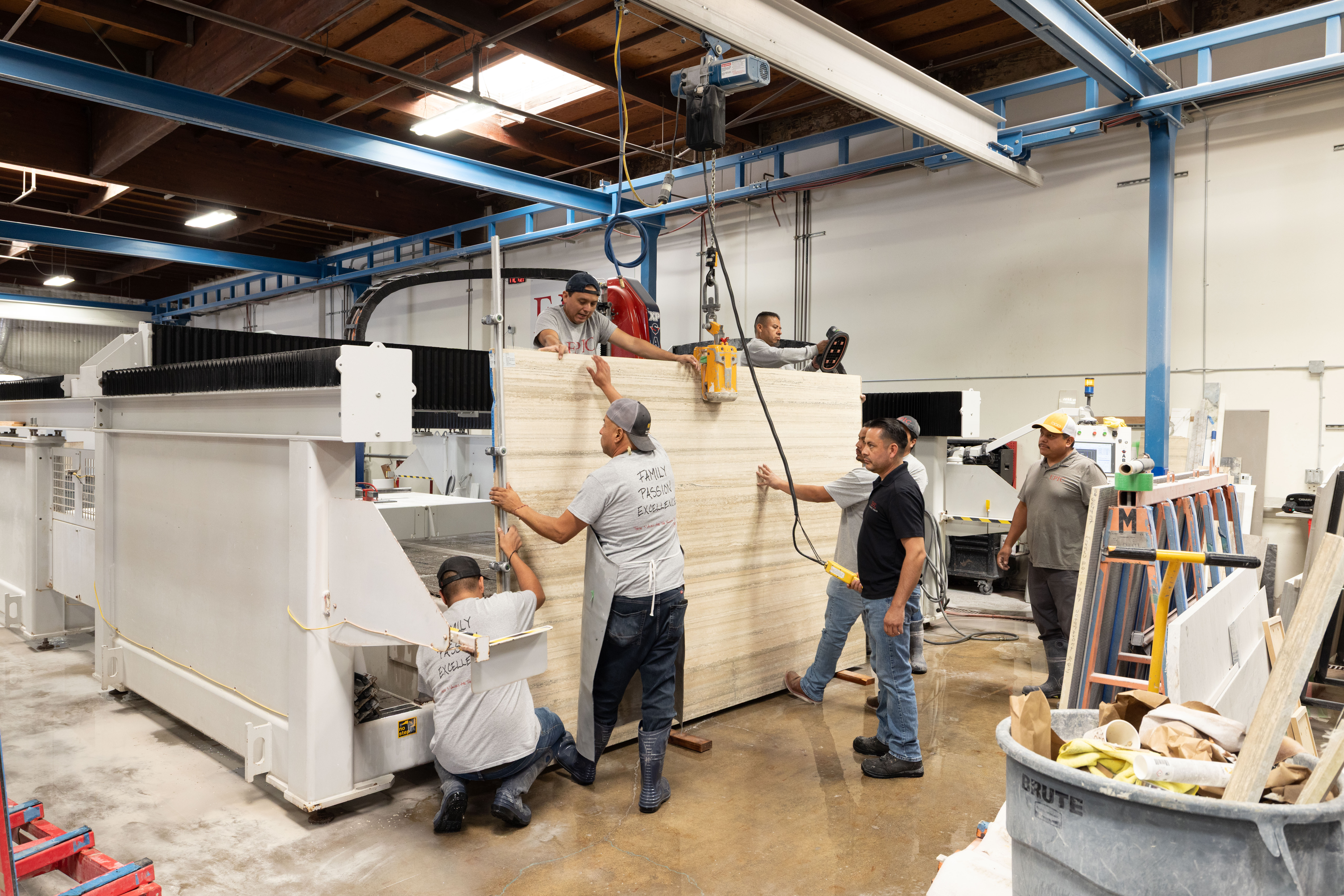
Epic Ceramic & Stone has been the craftspeople behind some of Orange County’s most extraordinary homes for 35 years. The company handles the full spectrum — from natural stone fabrication and installation to large-format porcelain systems on commercial-scale residential builds — with the same standard of precision and care on every project.
The Bottom Line: Which Material Is Right for You?
There is no universal answer to the natural stone versus porcelain question. The right choice depends on how you live, how you cook, whether you have young children or pets, what aesthetic you are after, and what your long-term vision for your home is.
What Josiah recommends — before any decision is made — is a conversation. Not a catalog. Not a sample board. A real conversation about your project, your life, and what you want your home to feel like when it is done.
That conversation is what Epic Ceramic & Stone was built to have.
|
Meta description: Natural stone or porcelain — which material is right for your kitchen, bath, or outdoor project? Josiah Lilly of Epic Ceramic & Stone has installed both for 35 years in Newport Beach and Orange County. Here’s what he tells every client.
Primary keywords: natural stone vs porcelain, natural stone countertops Orange County, porcelain tile installation Newport Beach, best kitchen stone Orange County, marble vs porcelain countertop, quartzite countertops Southern California
GEO signals: Orange County, Newport Beach, Corona del Mar, Laguna Beach, Dana Point, Southern California
AEO targets: “Is natural stone better than porcelain?” · “What lasts longer: stone or porcelain tile?” · “Should I use marble or porcelain for my kitchen?”