

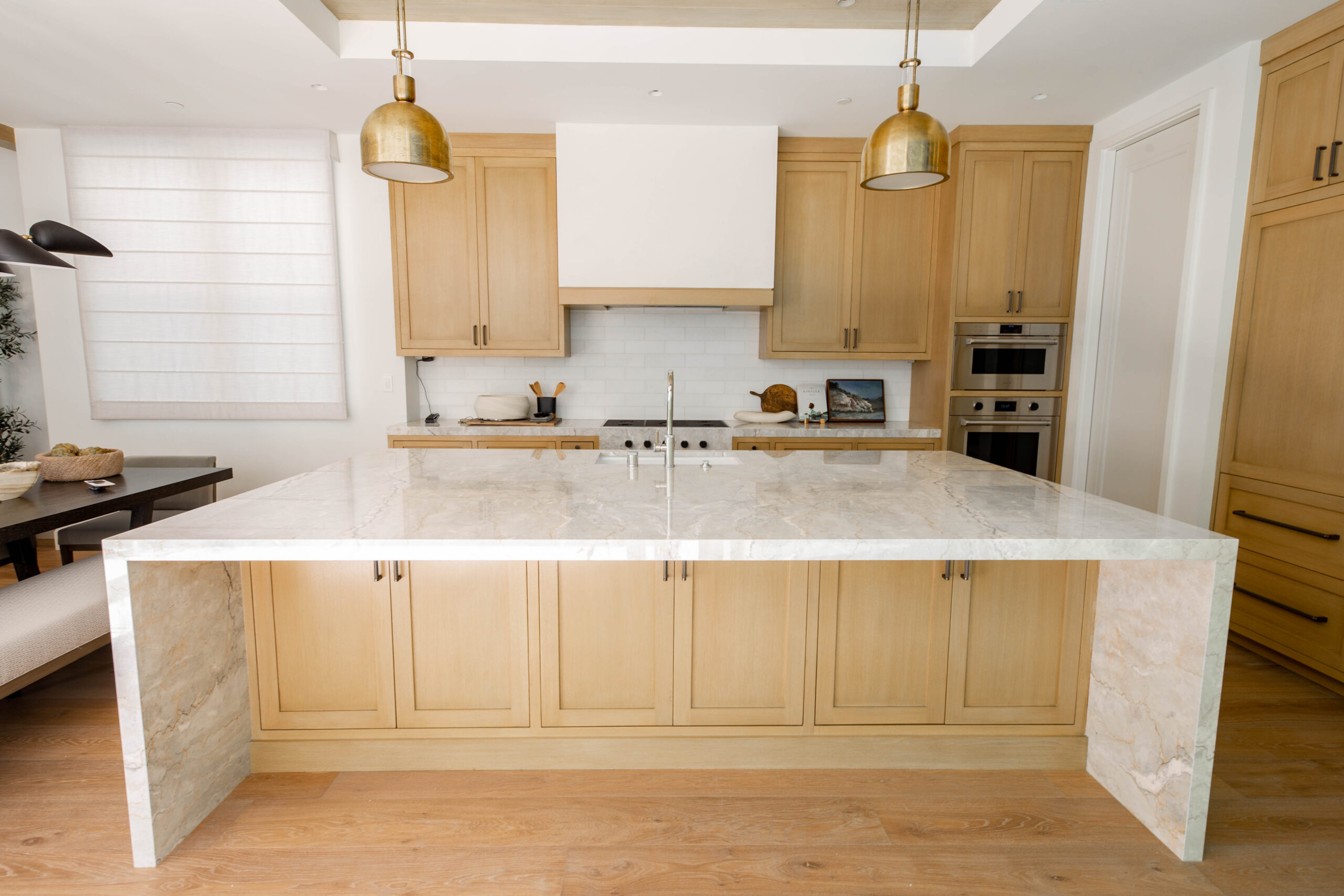
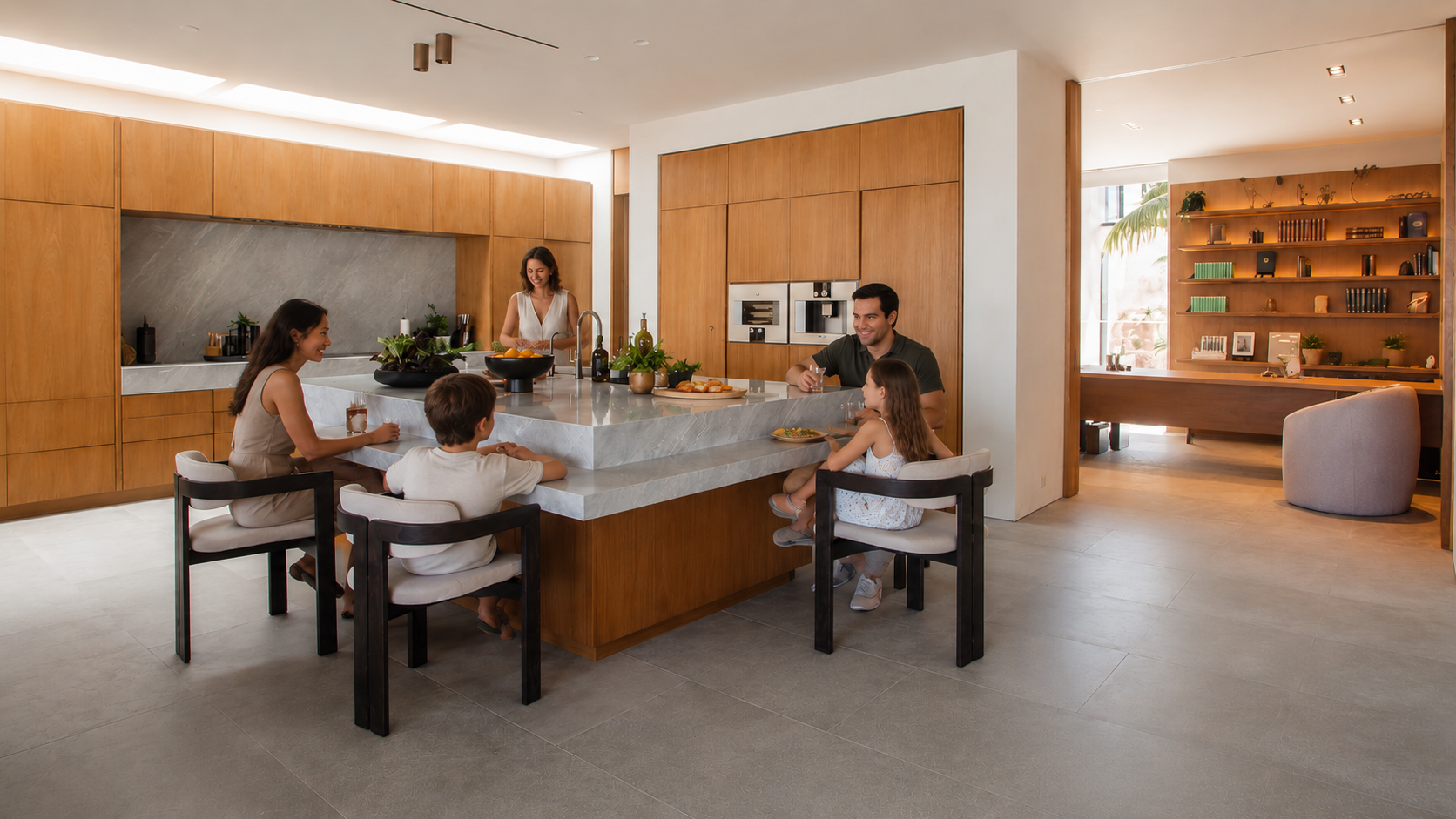
The kitchen countertop is the surface your home revolves around.
It is where you prepare meals, where your family gathers before dinner, where guests linger after a party. It is the first surface a buyer evaluates in a showing and one of the last decisions a designer makes before signing off on a project. It will be touched thousands of times before it is ever replaced.
Choosing the right material for it is not a small decision.
Josiah Lilly has installed kitchen countertops across thousands of Orange County homes over 35 years — from primary kitchens in Newport Beach estates to secondary kitchens in Laguna Beach remodels. His perspective on material selection is shaped not by what is trendy, but by what he has seen hold up — and what he has seen fail.
“I do not have a material I am trying to sell you,” he says. “I have materials I know and I have clients I want to be happy in five years. Those two things together are how I make recommendations.”
Here is how he thinks through the countertop decision.
Start With How You Use Your Kitchen
Before any conversation about material begins at Epic, Josiah asks a set of questions that have nothing to do with aesthetics.
How often do you cook? Do you chop directly on the counter or on a board? Do you have young children? Do you entertain frequently? How important is it that the surface looks the same in ten years as it does today?
The answers to these questions narrow the field faster than any design preference can.
A client who cooks daily, has a family with young children, and will not maintain a sealing schedule is not a marble client. A client who prioritizes the beauty of natural stone above all, has a kitchen that is used primarily for entertaining rather than heavy daily cooking, and is comfortable with the natural patina that develops over time — that client may be a perfect marble client.
“There is no wrong answer. There is only an honest one. My job is to help clients find the material that matches the life they actually live, not the life they imagine they might live.”
Quartzite: Josiah’s First Recommendation
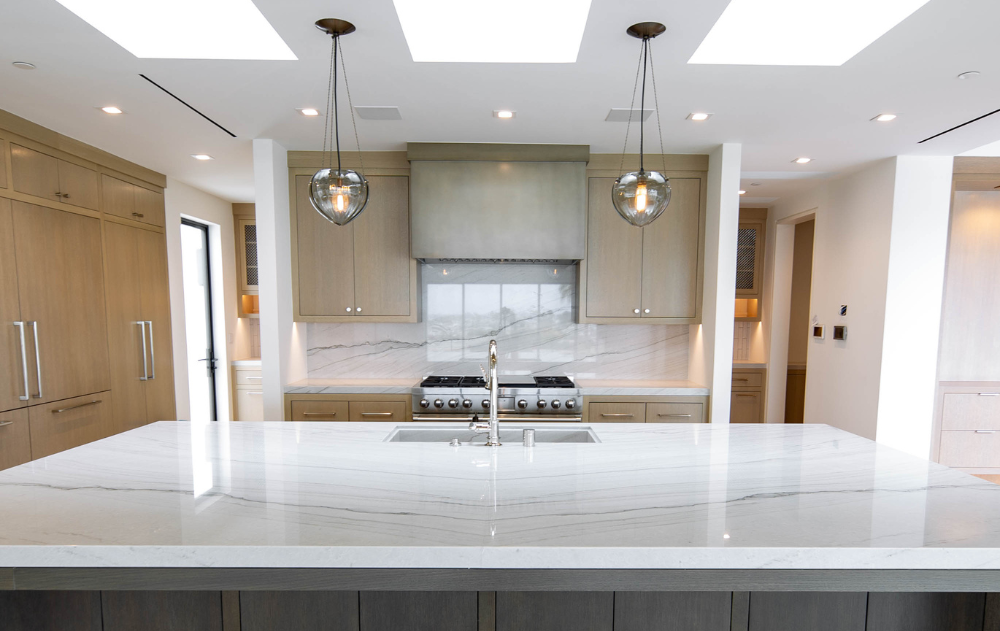
For the majority of Orange County homeowners who want the visual drama of natural stone with practical durability, quartzite is Josiah’s default recommendation.
Quartzite is a metamorphic rock — formed when sandstone is subjected to extreme heat and pressure — and the result is one of the hardest natural stone materials available. It is significantly more resistant to etching and scratching than marble. It is harder than granite. And the best quartzite slabs — Brazilian Super White, Taj Mahal, Macaubus Fantasy — have a visual movement and translucency that rivals the most sought-after marbles.
Quartzite does require sealing, and it should be cleaned with pH-neutral products. But its maintenance demands are considerably lower than marble — and its tolerance for the realities of kitchen life is considerably higher.
“When I have a client who says they want the look of Calacatta but they actually cook — and they have kids, and they are not going to reseal every year — I take them to the quartzite selection. And every single time, we find something that is as beautiful as what they were looking at and a much better fit for how they live.”
Marble: The Gold Standard for Luxury, With Conditions
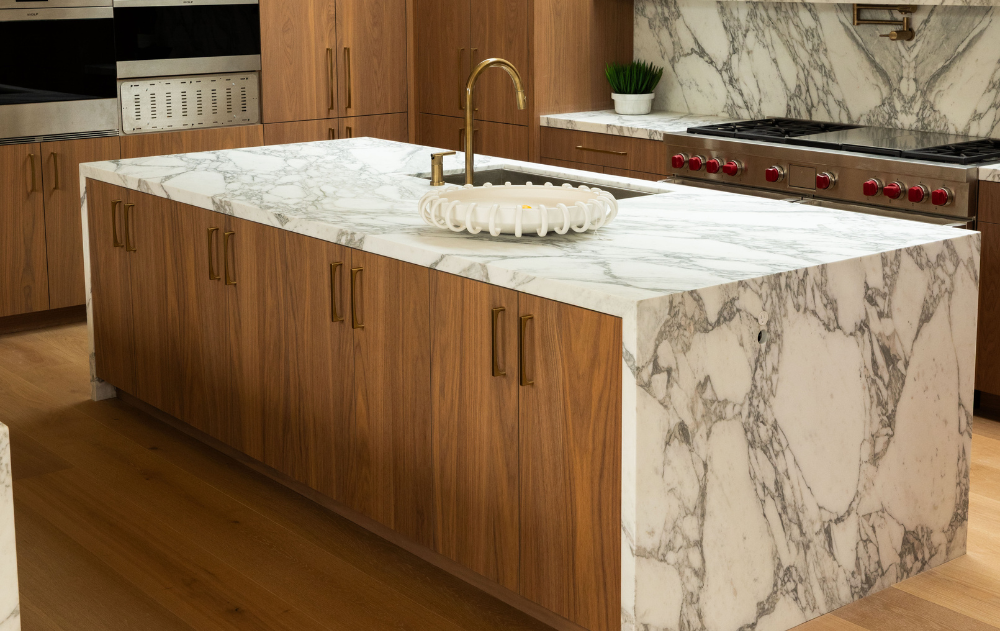
Marble is still the aspirational material for luxury kitchen countertops — and for the right client, it is absolutely the right choice.
The visual quality of Calacatta, Statuario, or Arabescato marble is unmatched. The translucency, the depth, the way light moves through a polished white marble surface — no other material does this. In a grand, formal kitchen where the island is a design statement rather than a workhorse, marble creates a level of luxury that defines the room.
The conditions: marble etches when it contacts acidic substances. Lemon juice, vinegar, wine, and even certain cleaning products will leave marks on a polished marble surface. Those marks can be re-polished, but they require professional attention. Marble also requires annual sealing and careful cleaning.
For clients who love marble and are fully informed about its characteristics — and who embrace the idea that a marble surface will develop a patina over time that tells the story of the kitchen — it is the perfect choice.
Porcelain Slabs: The Practical Luxury Option
The evolution of large-format porcelain technology has made porcelain slabs a genuinely competitive option for kitchen countertops — particularly for clients who want near-zero maintenance and a surface that will look the same in twenty years as it does today.
Modern large-format porcelain in marble-look finishes — particularly formats printed from actual stone photography — can be visually sophisticated in ways that earlier generations of porcelain tile could not match. For clients whose priority is low maintenance above all, Josiah presents porcelain slabs as a legitimate and beautiful option.
The nuance: large-format porcelain requires experienced fabricators and specific setting systems. The material is unforgiving of substrates that are not perfectly flat. And the seams, while minimized by large formats, are more visible in porcelain than in natural stone when the kitchen requires multiple pieces.
Granite and Beyond
Granite remains a popular choice for kitchen countertops, particularly in certain price categories. Josiah’s view: granite is extremely durable and highly resistant to heat, scratching, and etching. Its maintenance requirements are relatively low. The visual range of granite — from dramatic black marquinas to warm beige stones — is wide.
For clients who want a durable, lower-maintenance natural stone at a price point below quartzite, granite is an entirely appropriate choice.
The Book-Matching Question
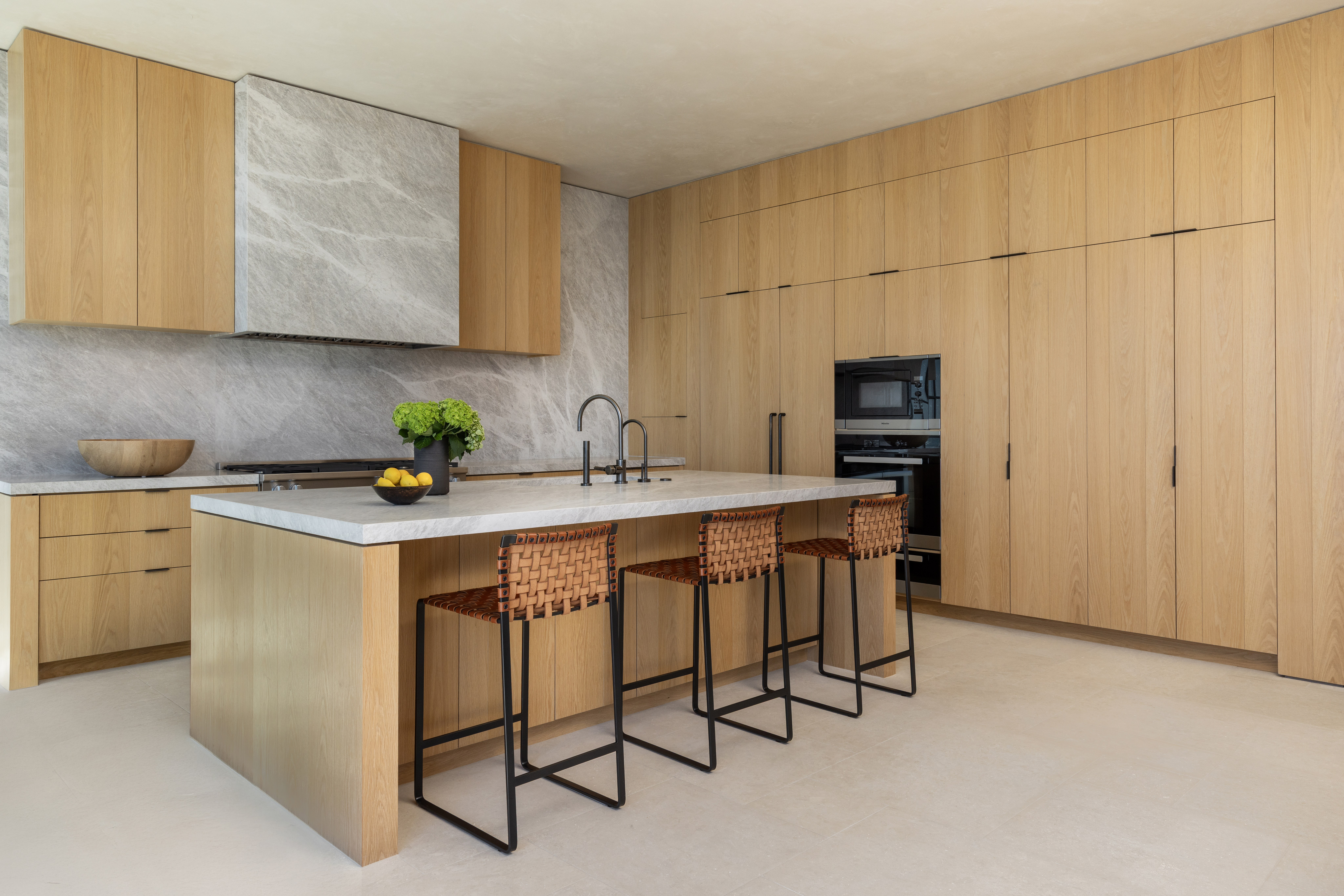
For kitchen islands — particularly large islands with significant visual presence — the question of book-matching is worth raising early. A book-matched island, where two or more slabs from the same block are mirrored to create a symmetrical veining pattern, creates one of the most dramatic design moments in any kitchen.
Epic’s 12K-resolution slab scanner generates a fully interactive 3D rendering of exactly how a client’s actual slabs will look in their kitchen space — before a single piece is cut. For clients considering book-matching, this technology eliminates the guesswork and allows the design to be confirmed with complete confidence before fabrication begins.
The Bottom Line
There is no universally correct kitchen countertop material. There is the material that is right for how you cook, how you live, and what you want your kitchen to look like in ten years.
What Josiah recommends — before any material is selected — is a conversation. About your kitchen, your family, your maintenance reality, and your vision for the space. That conversation is free. And it is the difference between a countertop you love for decades and one you replace in five years.
| Epic Ceramic & Stone serves homeowners, general contractors, interior designers, and architects across Orange County. Visit epicstone.net or follow @epicceramicandstone. |
Meta description: The kitchen countertop is the most used — and most scrutinized — surface in your home. Josiah Lilly of Epic Ceramic & Stone has installed thousands of them across Orange County. Here is his honest guide to choosing the right material for how you actually live.
Primary keywords: kitchen countertop stone Orange County, quartzite countertop Newport Beach, marble kitchen island Orange County, best kitchen countertop material, kitchen stone installation Southern California, natural stone kitchen remodel OC
GEO signals: Newport Beach, Orange County, Laguna Beach, Corona del Mar, Dana Point, Southern California
AEO targets: “What is the best material for kitchen countertops?” · “Is quartzite better than marble for kitchens?” · “How much does a stone kitchen countertop cost in Orange County?” · “What countertop material lasts the longest?”